Storying algorithmic ecosystems
Item
-
Titre de la conférence
-
Storying algorithmic ecosystems
-
Date de la conférence
-
11 February 2026
-
Résumé
-
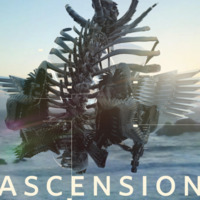
Lors de cette conférence, Laura Shackleford analyse le roman Ascension de Steve Tomasula comme une généalogie critique post-humaniste des écosystèmes algorithmiques. Elle montre comment la structure du roman, articulée autour de trois périodes historiques à Asunción, au Paraguay, retrace l’évolution de l’informatique depuis le XIXᵉ siècle jusqu’à un futur marqué par les crises écologiques et politiques. En interrogeant les récits de l’intelligence artificielle et de la technosphère, Shackleford met en avant le rôle des fictions dans la construction d’une conscience écologique et dans la réflexion sur les devenirs humains et technologiques.
-
résumé thématique généré par IA
-
Lors de cette conférence, Laura Shackleford, professeure au Rochester Institute of Technology, explore le roman "Ascension" de Steve Tomasula, en mettant en lumière sa capacité à offrir une généalogie critique post-humaniste des écosystèmes algorithmiques. Shackleford analyse comment le roman, à travers une narration riche et inventive, retrace l'évolution de l'informatique depuis la modernité du XIXe siècle jusqu'à un futur proche marqué par des crises environnementales et des régimes autoritaires. En interrogeant les représentations narratives de l'intelligence artificielle et des systèmes mondiaux, elle souligne l'importance de nouveaux modes de narration pour appréhender les défis contemporains. Le roman est structuré autour de trois périodes historiques à Asunción, chacune illustrant des transformations paradigmatiques dans notre compréhension du monde naturel et technologique. Shackleford met en avant l'idée que ces récits permettent de reconsidérer notre relation à la technosphère, un concept qui décrit l'intégration croissante des technologies dans les infrastructures matérielles. Elle souligne également le potentiel des récits pour encourager une conscience écologique et une action collective face à l'Anthropocène. Enfin, la discussion s'élargit à la manière dont d'autres œuvres littéraires et théoriques abordent ces questions, en questionnant les implications d'une vision post-humaniste qui pourrait parfois glisser vers un anti-humanisme, tout en cherchant à comprendre les trajectoires futures de l'humanité face à ses propres créations technologiques.
-
Citation tirée de la conférence
-
"The awareness that the separation of natural and human domains," the green and the gray, "was always a dangerous delusion, a denial of humans' primordial connectedness to the Earth which the Anthropocene is now again rendering inescapable, and even an ideological ruse justifying the dispossession and subjugation of the Earth's peoples, human and otherwise" (Bergthaller).
-
Econarratologist, Erin James: "Categories and concepts of current narratological models are insufficient for our epoch" because "narrative is changing along with the world in which we tell and receive stories"
-
All life, including humans, as material resources for an evolving, all-powerful "technosphere," Peter Haff's description of a new geological process within Earth systems through which "Humans have become entrained within the matrix of technology and are now borne along by a supervening dynamic from which they cannot singularly escape and survive…technology is the next biology"
-
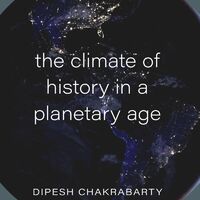
These multiscalar dynamics: "connect deep and recorded histories and put geological time and the biological time of evolution in conversation with the time of human history and experience," including "telling the story of human empires – of colonial, racial, and gendered oppression," "in tandem with the larger story of how a particular biological species, Homo Sapiens, its technosphere, and the species that co-evolved with, or were dependent on homo sapiens came to dominate…without ever taking our eyes off of the hollowed human" who comes to negotiate his or her own phenomenological and everyday experience of life, death, and the world." (Chakrabarty, Climate of History 7-8)
-
Type de la conférence
-
séminaire
Annotations
There are no annotations for this resource.
 Laura Shackelford
 Ascension
 Cosmic Summaries and the Ecological Value of Slow Narrative Experiences
 The Climate of History in a Planetary Age
 AI Ethics
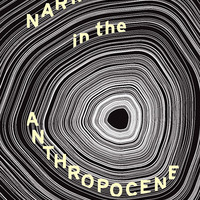 Narrative in the Anthropocene
 Towards a 'Natural' Narratology
 The Anthropocene: Key Issues for the Humanities
 Of Being Numerous
 Imagination morte imaginez
 La Technique et le Temps, 1 : La faute d'Épiméthée
 Staying with the Trouble: Making Kin in the Chthulucene
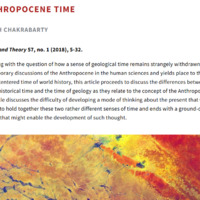 Anthropocene Time
 2001 : A Space Odyssey